Showing posts with label business plan. Show all posts

Monday, February 13, 2012

Is it on Sale?


McDonald's

Industry Average - Hotels & Restaurants

Coke

Industry Average - Hotels & Restaurants

Campbell's

Industry Average - Food Products

P/E (Trailing Twelve Months)

18.8%

27.4%

18.4%

16.8%

13.14%

10.36

P/E (5-Year Average)

19.5%

28.4%

17.8%

21.1%

16.18%

28.5

PEG Ratio

1.9%

1.7%

2.9%

58.0%

2.78%

2.21%

Price/Cash Flow (Most Recent Quarter)

18.5%

14.1%

17.6%

19.4%

7.68%

14.72%

Price/Cash Flow (TTM)

15.6%

15.4%

14.7%

15.8%

9.59%

16.36%

Price/Sales (Most Recent Quarter P/E)

3.7%

2.6%

3.5%

3.7%

1.17%

10.22%

Price/Sales (TTM)

3.8%

2.8%

3.3%

2.9%

1.31%

1.34%

Price/Book

7.2%

6.5%

4.7%

4.0%

9.65%

0.70%


Building a Small Business That Warren Buffett Would Love,available at Amazon.comorBarnesandNoble.com.
The over-arching vision of Building a Small Business That Warren Buffett Would Loveis to create
One Million Jobs.
Like us on Facebook to find out how you can support this mission!

Friday, February 10, 2012

Annuities are Fun ... like Kernel Seasons on Popcorn except Different

Growing Annuity

“A growing annuity is a cash flow that grows at a constant rate for a specified period of time.”

Stuart Gabriel, a second-year MBA student, has just been offered a job at $80,000 a year. He anticipates his salary increasing by 9 percent a year until his retirement in 40 years. Given an interest rate of 20 percent, what is the present value of his lifetime salary?

Clear time value of money memory: 2nd CLR TVM
Compounding should remain at P/Y = 1 (third row second column), ENTER (first row second column), down arrow (first row fourth column), C/Y = 1.

First step: find out I and PMT

I = {(interest rate-growth rate)/(1+growth rate)}*100
= {(.20-.09)/(1+.09)}*100
=10.09

Press STO, 1 to store the number

PMT = Current Annual Salary/ (1+growth rate)
= (80,000/1.09)
=73,394.50

Press STO, 2 to store the number

Second Step: enter the following

N = 40, number of payment/cash flows in the growing annuity.
I = press RCL, 1 to recall the number we saved
PV = Unknown
PMT = RCL, 2 to recall the number
FV = 0
CPT PV = $711,731
Growing Perpetuity

“Assume that you are assessing a stock that paid $2 as dividends last year. Assume that you expect these dividends to grow 2 percent a year in perpetuity, and that your required rate of return for investing in this stock, given its risk, is 8 percent. With these inputs, you can value the stock using a perpetual growth model:

Expected dividends next year / (Required return - Expected growth rate) = $2 (1.02) / (.08 - .02) = $34.00”

“These cash flows are the essential building blocks for virtually every financial asset. Bonds, stocks, or real estate properties can ultimately be broken down into sets of cash flows. If you can discount these cash flows, you can value all of these assets.”

_________________________________________________________________

Building a Small Business That Warren Buffett Would Love,available at Amazon.comorBarnesandNoble.com.
The over-arching vision of Building a Small Business That Warren Buffett Would Loveis to create
One Million Jobs.
Like us on Facebook to find out how you can support this mission!


Wednesday, February 8, 2012

Peter Frampton and Perpetuities - Yay!


An Annuity and Ye Olde BA II Plus Business Calculator

For example’s sake, let’s say you can purchase a coin operated laundry machine business for $80,000 outright or you can make installment payments of 10,000 a year for 10 years. Which is the better deal? If the discount rate is 8%, we would break out our hand BA II Plus business calculator and enter the digits as follows:

P/Y = 1

N = 10

I/Y = 8

PMT = $10,000

CPT PV

The result is $67,101. Thus, it would be wiser to take the installment payment deal and use the rest to stock up the detergent dispensers with Tide.

A Perpetuity Goes on Forever, Just Like the Peter Frampton Song Do You Feel Like We Do

To find the present value of a perpetuity, you simply divide the annual payment by the interest rate. For example, a bond that pays a $50 coupon each year with an interest rate of 10 percent has a present value of $500.

PV = $50 / .10 = $500

Mark A. White provides us with a very interesting example of a perpetuity in his workbook, Financial Analysis With an Electronic Calculator: “Former US President John F. Kennedy’s grave in Arlington Cemetery is marked by an ‘eternal flame,’ which has burned continuosly since his assassination in 1963. Suppose that annual fuel expenses were estimated at $1,200 per year, and the annual interest rate at that time was 5 percent. How much should this portion of the monument have cost at the time of its construction?”[i]

Answer = $24,000

PV = $1,200 / .05

______________________________________________________


Building a Small Business That Warren Buffett Would Love,available at Amazon.comorBarnesandNoble.com.
The over-arching vision of Building a Small Business That Warren Buffett Would Loveis to create
One Million Jobs.
Like us on Facebook to find out how you can support this mission!


[i] Financial Analysis With an Electronic Calculator, Mark A. White, Fourth Edition, McGraw Hill, 2000, p30


Tuesday, February 7, 2012

I’ll Gladly Pay You Tuesday For a Hamburger Today

“When valuing an asset, use the simplest model that you can. If you can value an asset with three inputs, don’t use five. If you can value a company with three years of forecasts, forecasting 10 years of cash flows is asking for trouble. Less is more.”[i]

A dollar today is worth more than a dollar tomorrow, or in Popeye terms, “I’ll gladly pay you Tuesday for a hamburger today” is a raw deal for the hamburger stand owner since technically, the dollar on Tuesday will be worth less.

Three reasons why a dollar or cash flow is worth less than a cash flow today:

1) Inflation … although technically, price growth can flatten out and even reverse into deflation, in general prices increase meaning the same dollar will not buy as much goods. Think of it this way: a box of Rice Krispies cost 16 cents in 1950 and in 2000 it cost $2.99. If you had a dollar in 1950 and held it until 2000, you could have purchased 6.25 boxes in 1950 but only one-third of a box in 2000. Better hope the cashier has a saw blade handy … Snap, Crackle, Pop! This equates to a 95% loss in purchasing power!

2) Folks would just rather consume today; there is just too much uncertainty tomorrow.

3) That dollar tomorrow may never show up. Wimpy has been known to renege on his offers while gorging on boat-loads of hamburgers.

Discounting is the process of converting future dollars or cash flows into today’s dollars using a discount rate. This discount rate takes into consideration the rate of inflation, the consumption preferences and the risks associated with receiving the dollar in the future. (Remember, it might not show up.)

Five types of cash flows exist:

  • Simple cash flows
  • Annuities
  • Growing annuities
  • Perpetuities
  • Growing perpetuities

It is time to break out your trusty BA II Financial Calculators.

PV = $0

FV = $20,000

I/Y = 10%

N = 10

Building a Small Business That Warren Buffett Would Love,available at Amazon.comorBarnesandNoble.com.
The over-arching vision of Building a Small Business That Warren Buffett Would Loveis to create
One Million Jobs.
Like us on Facebook to find out how you can support this mission!


[i] The Little Book of Valuation, Aswath Damodaran, John Wiley and Sons, 2011, Hoboken, New Jersey

Sunday, February 5, 2012

Two Types of Valuation

Ultimately, two types of valuation exist: Intrinsic and Relative.

In intrinsic valuation, the price of an asset is determined by "the cash flows you expect that asset to generate over its life and how uncertain you fell about these cash flows."1.

In other words, you want an asset that delivers consistent, steady cash flows so those future cash flows so that an accurate valuation may be formed.

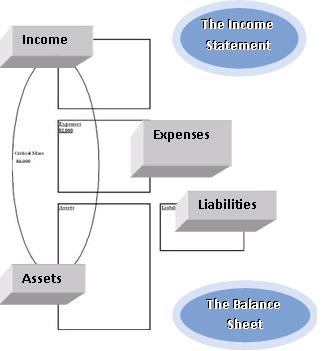
Chart 1.1 for example represents the cash flow of asset to the income column. A) Cash flow must exist and B) in order to form a reasonable valuation they must be strong and steady.

Chart 1.1 The Picture of Cash Flow

You can see this valuation at work in the Warren Buffet model of valuation ...


Intrinsic Value, The Earnings Approach ... Same Thing

This method is closest to how Warren Buffett values a stock investment. In this approach, the average earnings from the past three to five years are divided by a capitalization rate, typically the rate of return expected from the investment. Average earnings of $100,000 divided by a cap rate of 20 percent gives you a business value of $500,000. The $500,000 investment provides a 20 percent rate of return. Cap rates are typically bucketed off into different classes based on the size and type of business.4

1. 10 to 15 percent—large-sized businesses, over $10 million in sales.

2. 15 to 20 percent—medium to large-sized businesses with $2 million to $10 million in sales.

3. 20 to 30 percent—small to medium-sized businesses with $500,000 to $2 million in sales.

4. 30 to 50 percent—small-sized retail or service businesses.

With an existing business, ask for the income tax returns, ideally, 10 years’ worth.

The second approach, relative valuation is the same method used to value a house in which a Realtor pulls a list of similar houses that have sold recently and adjusts the selling price of the house in question up or down based on inferior or superior features. With a stock, this means comparing pricing to similar stock using the price to earnings ratio. A stock trading at 40 times earnings compared to a peer group that trades around 20, for all intents and purposes, appears overvalued.


1. The Little Book of Valuation, Aswath Damodaran, p. 4, John Wiley and Sons,2011


Building a Small Business That Warren Buffett Would Love, available at Amazon.comorBarnesandNoble.com.

The over-arching vision of Building a Small Business That Warren Buffett Would Loveis to create
One Million Jobs.
Like us on Facebook to find out how you can support this mission!

Friday, February 3, 2012

Principles of Corporate Finance


Table 1.1 Corporate Finance Principles

Source: Applied Corporate Finance, Aswath Damodaran

The Investment Decision

Invest in assets that earn a return greater than the minimum acceptable hurdle rate.

The hurdle rate should reflect the riskiness of the investment and the mix of debt and equity used to fund it.

The return should reflect the magnitude and the timing of the cash flows as well as all side effects.


The Financing Decision

Find the right kind of debt for your firm and the right mix of debt and equity to fund your operations.

The optimal mix of debt and equity maximizes firm value.

The right kind of debt matches the tenor of your assets: the term of the debt should match the term of the need.


The Dividend Decision

If you cannot find investments that make your minimum acceptable rate, return the cash to owners of your business.

How much cash you can return depends on current and potential investment opportunities. In other words, if you can no longer find optimal investments that meet the firm’s hurdle rate, it may be time to distribute.

How you choose to return cash to the owners will depend on whether they prefer dividends or buybacks. Stock buybacks are beneficial for existing shareholders as earnings per share will increase.[i]


[i] Applied Corporate Finance, Aswath Damodaran, John Wiley and Sons, INC, Hoboken New Jersey, 2006


__________________________________________________

Building a Small Business That Warren Buffett Would Love, available at Amazon.comorBarnesandNoble.com.

The over-arching vision of Building a Small Business That Warren Buffett Would Loveis to create
One Million Jobs.
Like us on Facebook to find out how you can support this mission!

Thursday, February 2, 2012

New Disney Destination: To Infinity and Beyond! Part 4

The Numbers

Shares of Disney were down 3.5% year to date in 2011 due in part to a lackluster movie performance and softer park attendance, but fourth quarter 2011 saw the company’s EPS increase 24% to a record $2.52 compared to $2.03 in the prior year. (For a full run-down of a long-term analysis, see the supplemental, Warren Buffett Diagnostic.)

Disney is trading at 89% of its 52 week trading range, 15.6 times earnings and has a 13.5% marginal growth rate. Although it does not appear cheap right now, the long-term prospect looks like it will reach infinity and beyond.


__________________________________________________

Building a Small Business That Warren Buffett Would Love, available at Amazon.comorBarnesandNoble.com.

The over-arching vision of Building a Small Business That Warren Buffett Would Loveis to create
One Million Jobs.
Like us on Facebook to find out how you can support this mission!

Wednesday, February 1, 2012

An Improving Economy?

Private-sector job growth showed 170,000 new jobs added in January, in line with economists expectations. This coupled with strong economic news out of Europe led to a rally in stock futures this morning. DJIA gains for January were the biggest in 15 years. December jobs added were revised down to 292,000 from 325,000.

For each copy sold of Building a Small Business That Warren Buffett Would Love, an eBook will be given to an unemployed person or needy entrepreneur ... in-line with the Toms Shoes campaign.

_________________________________________________________________________________________________________

Building a Small Business That Warren Buffett Would Love, available at Amazon.comorBarnesandNoble.com.

The over-arching vision of Building a Small Business That Warren Buffett Would Love is to create
One Million Jobs.
Like us on Facebook to find out how you can support this mission!